What a great question—and one with many possible answers! No matter what some might claim, there is no single correct or incorrect approach to learning tarot and oracle cards. Trusting your intuition is certainly part of it, and I'll get to that shortly.
When people begin reading tarot, they often overlook that it comes with a responsibility. If you're reading for yourself, you must strive to stay objective rather than subjective—and after nearly 40 years of giving readings, I can tell you that's much easier said than done!
That's precisely why many people prefer to have someone else read for them, which is perfectly fine. On the other hand, who knows you better than you do? Let's examine some other common misconceptions about reading tarot and other oracles.
Buying Your Own Cards Is Perfectly Fine
This is one of the most basic points. You can't read tarot without cards, after all. There's a widespread superstition that you shouldn't purchase your own deck, but I don't accept that. What if someone gifts you a deck whose artwork you dislike? Are you obligated to try to love it just because it was a present? Absolutely not!
When you buy tarot cards with money, that money represents energy. It might be something you earned through work, or something given to you—in a birthday card, for instance. In either case, you're exchanging energy for energy, and you're also selecting something you genuinely like.
How could that be wrong? It's fine to buy your own cards. But if you're around someone superstitious, you can give them your money and let them make the purchase for you, then hand you the cards. That way, you didn't technically buy them yourself!
A Teacher Is Not Required
Many people will warn you that tarot is dangerous or that certain oracles can only be learned from specific individuals. This kind of one-upmanship is common in some metaphysical circles and should essentially be ignored. You can learn tarot through diligent self-study. You don't need a master—or anyone else, for that matter!
That said, some guidelines are worth following. Your point about trusting your gut is one of them. For example, when I see the Empress, I always perceive some kind of birth—either childbirth or the birth of an idea. My friend Paula always sees a hospital situation and nurturing.
The wonderful thing is that, because tarot taps into your unconscious mind during readings, different interpretations of the same card are completely valid! Reading tarot is all about what it means to you; when you learn from a book, you're merely studying what it meant to that author. You're allowed to hold different opinions.
Memorizing Traditional Meanings Is Not Required
Now, before traditional tarot readers get upset, I want to emphasize that I'm not dismissing the archetypal meanings. True tarot scholars know that the more you learn about the cards, the more there is to learn! Astrology, numerology, and all sorts of other symbolism are packed into the images.
Just as everyone who ever wrote a tarot book shared what the cards meant to them, everyone who ever designed a tarot deck did the same.
Traditional meanings will aid your understanding of the cards, but there's no reason to memorize them by rote. I believe it was Einstein who said, "Never memorize something that you can look up."
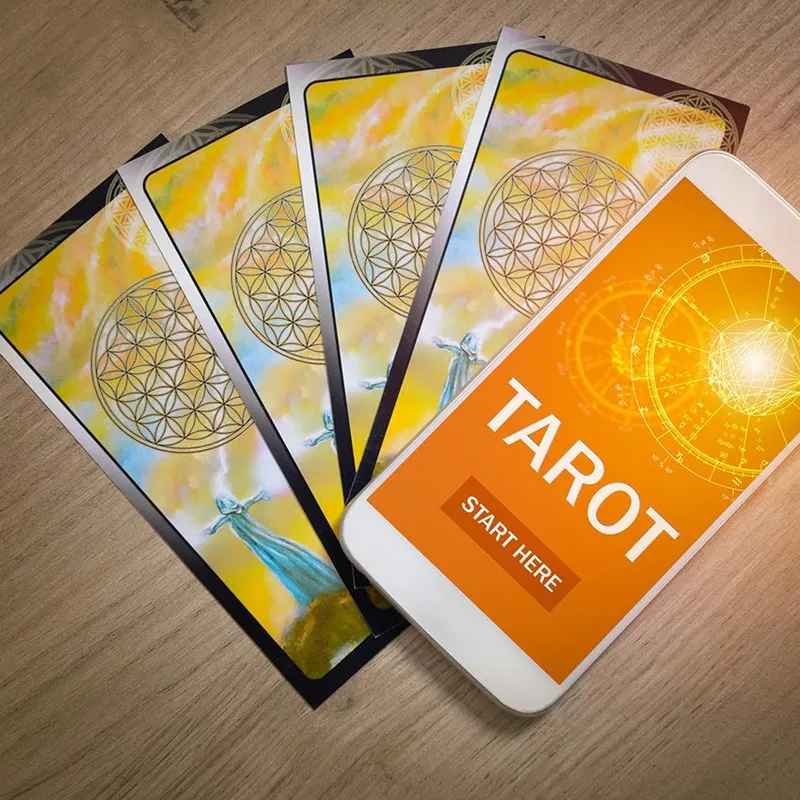
There are enough research books on the meanings of the various aspects of tarot—including online books and even phone apps—that there's no need to commit a lot of heavy symbolism to memory.
Begin with First Impressions
I've said it before and I'll say it again: to read tarot or another oracle is to interpret what it means to you. The best way to do this is to start with first impressions. Take the Three of Swords, for example.
Is it a happy card? No! The first thing that came to my mind when I was first learning to read tarot was the old saying "two's company, three's a crowd." Because I saw a heart, I figured this card meant there had been a heartache, probably caused by someone intruding where they weren't wanted.
Sure enough, this card often appears in relationship readings when the other party has had an affair!
Use the Instruction Book as a Backup
Most tarot decks come with a little white book, or perhaps even a full-sized instruction manual. By all means use it, but don't depend on it. I like to read through these when I'm exploring a new deck, to see what the designer was conveying, but it's not necessary to rely on the meanings in the book.
In all cases, you're using the deck because of what it's saying to you, not what the designer was saying to you—make sense?
Sometimes the cards won't speak to you. This happens for various reasons. Like anything else, tarot can have a bad day! Maybe you're just meant to put the cards away for a while and try again later. However, if you want to persevere, this is where the instruction book really helps.
Look up what the card means in the book, then revisit your own viewpoint. Sometimes you just need a fresh idea to get the cards conversing with you again.
Writing Your Own Tarot Book Is Easy
I'm serious! Want to know how? Grab your favorite tarot deck and start working with it. Go through the cards and write down your impressions. When you do readings, note any epiphanies you had, how particular cards worked together, or what you saw for the first time.
It may seem insignificant, but write it down anyway. All of these thoughts and revelations are the tarot speaking to you. How do you think other people wrote their books?
As you work with the cards, you'll probably—sooner or later—want to read what others have written about the meanings. Write down your thoughts on that too. Do you agree? Disagree? Why? All of this builds up a vast databank of information that is personal to you—your own personal book on how to read tarot.
After all, they're your cards and you're the one reading them, so why not write your own guidebook for doing so?
You Are Your Own Authority
This ties in with writing your own book. What the cards mean to anyone else is immaterial when you're the one reading them. Once you become proficient enough in your own methods, you may want to join the ranks of others and do readings professionally, or perhaps have your own ideas published for others to read.
While there is no hard and fast rule on how to learn tarot, some ethics must be followed. It's okay to write about why The Tower is a positive card, even though most references to it are quite cautionary. If you see it as something positive, explain the traditional meanings (disruptions, warnings, endings), and then explain why you feel it is saying something else.
There are entire decks that turn tradition on its head, rearranging the order, changing the meanings, and more. It's up to you to do what's right for you.
Conclusion
You see, there is no one path when it comes to learning to read tarot. The best way is a combination of your own intuition, a study of the traditional meanings, and gathering as much information as you can to include in your own tarot journal.
Be warned, though: tarot is addictive, and once you start delving into the archetypes and images, you may find you want to keep exploring more and more decks and more and more books. Go right ahead. Maybe one day we'll see you in print, too!