Skip to content
  • The Astrological Physician

    Jupiter’s Role in Illness: A Seventeenth-Century Astrological Diagnosis by Zodiac Sign

    An exploration of how Jupiter’s hot and moist qualities were once thought to govern blood-related ailments and diseases of the liver and lungs. The text details how different zodiac placements of Jupiter were interpreted as indicating specific conditions—from head swellings in Aries to dropsy in Cancer and Pisces—reflecting the era’s practice of linking bodily symptoms and treatments to astrological positions.
  • Astrology Classics

    When a Stable Mind Faltered: A Historical Astrological Analysis of Extreme Conduct

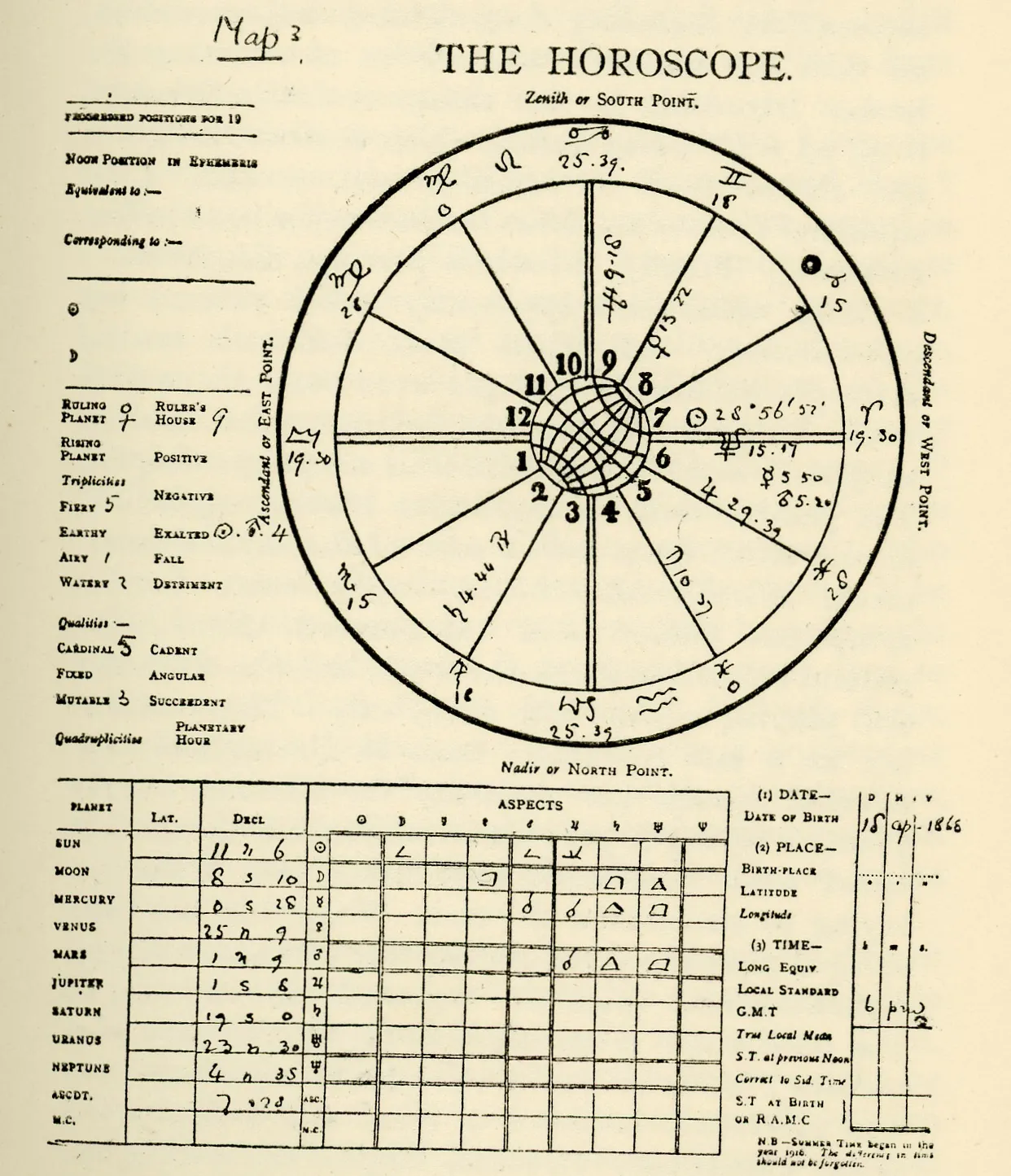
    A historical astrological case is revisited: a person of sound character who fell into erratic and extreme behavior, attributed to a Mars-Uranus square and related planetary configurations. The account describes how an otherwise balanced individual, under specific astrological directions, experienced a temporary breakdown of moral restraint, leading to forgery and impersonation aimed at mending a broken friendship. The article critiques the asylum treatment she received, arguing that her condition was temporary and that a more nuanced, supportive approach—informed by astrological understanding—might have prevented unnecessary suffering. The analysis underscores the need for educational and therapeutic methods that leverage supportive astrological factors to build resilience before crises arise.

  • Tetrabiblos

    How Planetary Rulers Shape the Character of Human Action in Tetrabiblos 4

    This passage explains the two methods used to identify the planet that governs a person's actions—by examining the planet making its morning appearance nearest the Sun and the planet at the culminating sign, especially when it applies to the Moon. It then details how the nature of Mars, Venus, and Mercury, together with the signs they occupy, determines the kinds of professions and activities associated with a birth chart. The text further describes how aspects from benefic or malefic planets and angular positions affect the scale and success of those actions.

  • A Treatise on Astrology

    Neptune in the Fourth House: Legacy, Solitude, and Unseen Risks

    Astrological tradition holds that Neptune placed in the fourth house shapes early home life, family ties, inheritance, and the later years, often bringing instability and eccentricity. This analysis draws on historical examples to show how astrologers linked this position to isolation, unusual experiences, and hidden difficulties, while noting that such traits can also support deep reflection.

  • The Light of Egypt

    Spiritual Symbolism of the Horoscope’s Twelve Houses: A Reversed Zodiac Journey

    This exposition delves into the spiritual significance of the twelve astrological houses, emphasizing how their order mirrors an inward, reversed zodiacal path that traces the soul’s descent from pure spirit into matter and its subsequent ascent. It situates the discussion within the esoteric astrology of the late nineteenth and early twentieth centuries, a milieu that prized symbolic interpretation, the soul’s evolutionary journey, and the fusion of astrological symbolism with spiritual growth.

  • A Treatise on Astrology

    Uranus in the Sixth House: Health, Servants, and Daily Life

    This analysis examines how Uranus's placement in the sixth house is thought to bring unpredictability to health, employment relationships, daily routines, and interactions with inferiors. Drawing on historical figures such as Edison, Mary Queen of Scots, Wagner, and Kant, it explores the potential for sudden illnesses, difficulties with servants, speculative investments, and eccentric attire, while emphasizing the need for careful interpretation based on house cusp and planetary aspects.

  • Anima Astrologiae

    Guido Bonatti’s 125th and 126th Considerations: Ascendant Sign and the Power of Mercury

    This exposition of Bonatti’s 125th and 126th considerations shows how the rising sign in a nativity or horary question ties the Ascendant to the affairs of another house ruled by the same planet, and how Mercury’s condition and placement—especially in Capricorn or Aquarius—shape character and intellect. These ideas illustrate the medieval astrological focus on planetary rulerships and practical judgment.

  • Astral Worship

    When Nature Wrote Scripture: Seasonal Cycles Behind Fall and Redemption Narratives

    An examination of how ancient faiths turned the sun's annual withdrawal and return into allegories of human downfall and salvation. The article argues that doctrines like original sin, incarnation, atonement, and final judgment were built upon observed seasonal and astrological patterns rather than historical events, and that these paired ideas stand or collapse as a single theological structure.

  • A Treatise on Astrology

    Uranus in the Fifth House: Children, Pleasures, and Unconventionality

    Astrological tradition holds that Uranus in the fifth house brings irregular outcomes regarding offspring, intense and rebellious pleasures—especially sexual—and a taste for excitement over convention. Historical figures like Luther and Savonarola illustrate how this placement can manifest in either mystical longing or public notoriety, while scientific temperaments may neutralize its expression.

  • Anima Astrologiae

    Guido Bonatus on Planetary Conditions: Considerations 26–40

    The following considerations, numbered 26 through 40, detail how the medieval astrologer Guido Bonatus assessed planetary strength and weakness—including speed, station, aspect, and dignity—to judge the likely outcome of a matter. The focus is on the nuanced ways difficult planets (infortunes) might either hinder or assist depending on their placement and connections. These guidelines reflect a historical approach in which astrology was applied as a practical set of rules, with careful attention to planetary behavior and context.

  • A Treatise on Astrology

    The Twelve Houses of Heaven: Traditional Meanings in Astrology

    This chapter examines how early astrologers linked each of the twelve astrological houses to particular life domains, detailing their conventional significations for chart interpretation. It also discusses a historical technique of rotating the horoscope to assess the fortunes of individuals associated with the native, noting its practical limitations.