Life can feel overwhelming at times, full of uncertainty and obstacles. Many people seek out professional palm readers or astrologers to gain insight into their character, their future, and their purpose. But what if you could access that kind of self-knowledge on your own—and save some money while doing it?
Palmistry, much like astrology, is a complex art that takes years to truly master. Still, you don't need to be an expert to get started. With this guide, you'll learn the foundational elements of palm reading and be able to give yourself a meaningful at-home session. By examining the distinctive lines and shapes of your hands, you can discover more about who you are and what drives you.
We'll start with the four hand types.
Step 1: Determine Your Hand Type
Palmistry is closely tied to astrology, especially through the four elements.
Hands fall into four categories, each linked to one element: Fire, Earth, Water, or Air.
Fire Hands
A Fire hand features a rectangular, elongated palm with fingers that are shorter than the palm itself. In astrology, Fire signs are known for passion, drive, and a feisty spirit—and those with Fire hands often share these traits. They are energetic and creative, with a strong need for stimulation. Boredom comes easily to them, so they constantly seek out new and exciting activities. Warm and friendly, they can also be impatient and act on impulse.
Earth Hands
Earth hands are typically broad and square, with a large palm and short fingers. In astrology, Earth is a grounded and responsible element, and Earth hands reflect that. People with Earth hands are practical, sensible, and hardworking. They also feel a deep connection to nature and relish any time spent outdoors. Like Earth signs, they can be quite stubborn.
Water Hands
Water hands have a shorter, oblong palm and long, graceful fingers. Astrologically, Water is associated with emotion, intuition, and creativity—qualities that also describe those with Water hands. These individuals experience emotions deeply and intensely, and they are adept at picking up on others' moods. Water hands suggest an idealistic person with a rich fantasy life and creative leanings, which can sometimes lead to overindulgence.
Air Hands
An Air hand consists of a short, square palm with long fingers. In astrology, Air is social, quick-witted, and intellectual, and these traits carry over to people with Air hands. They are intelligent and witty, but their minds can be overactive, leading to racing thoughts and anxiety. Air hands thrive on social interaction, sharing ideas and information through meaningful conversation. They may need to put in extra effort to connect with their emotions.
Step 2: Examine Your Finger Lengths
While finger length ties into hand shape, you can learn even more about yourself by looking at your digits in detail.
- Long: Long fingers suggest a feminine, inquisitive energy. These individuals are detail-oriented and considerate.
- Short: Shorter fingers point to an intuitive and impulsive nature. These people don't spend much time weighing options—they prefer to dive right in.
- Open: If your fingers naturally spread apart when your hand is relaxed, you are open-minded, unconventional, and true to yourself.
- Closed: Fingers that stay close together indicate someone who is uncomfortable with change and new ideas.
Step 3: Read the Lines on Your Palm
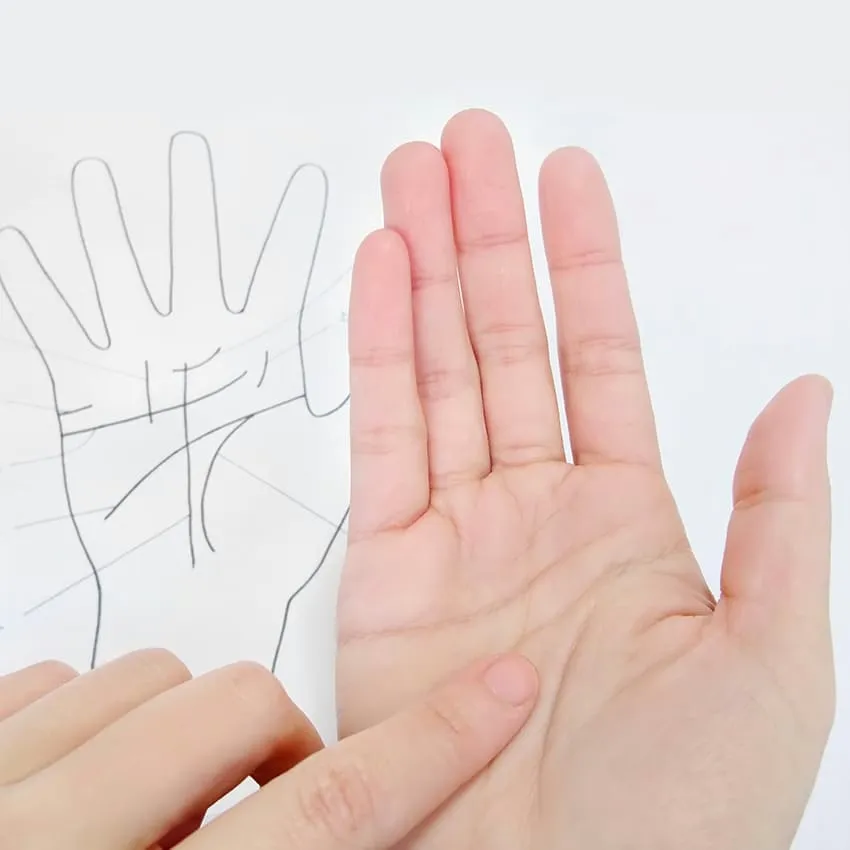
There are four major lines to examine: the Head line, the Heart line, the Life line, and the Fate line.
Many palm readers focus on the dominant hand, but you can also gain insight from your non-dominant hand. Some believe the dominant hand shows your current path, while the non-dominant hand reveals your potential.
The Head Line
The Head line reflects wisdom and intellect.
- Long & Straight: A long, straight Head line suggests someone who thinks carefully before making decisions. It can also indicate overthinking and rumination.
- Short: A short line points to an impulsive person who acts quickly.
- Split: If your Head line splits near either end, you are sensitive and caring about others' emotions and thoughts.
- Long & Curved: If your Head line curves toward the lower corner of your palm, you are creative and inventive, with a vivid imagination.
- Crossed Over: If several smaller, lighter lines cross your Head line, you will likely face some major decisions in your lifetime.
The Heart Line
This line relates to your emotional center and romantic life.
- Long & Straight: If your Heart line is long, straight, and parallel to your Life line, you are practical and reserved about emotions. You think rationally and analytically.
- Short & Straight: A short, straight Heart line indicates someone who values independence and freedom over romantic commitments.
- Connected to the Life Line: If your Heart line joins your Life line, you may experience frequent heartache, as your heart breaks more easily than most.
- Split: If your Heart line splits into two, you probably put others' needs before your own.
- Long & Curved: You are a passionate person who expresses yourself creatively and energetically.
The Life Line
The Life line is tied to your personal destiny. Many people mistakenly think its length predicts how long they will live, but that is not the case.
- Long & Curved: If your Life line is long and curves around the base of your thumb, you are likely energetic, physically healthy, and loyal to loved ones.
- Long & Straight: A Life line that doesn't curve suggests a practical and cautious individual.
- Deep: If your Life line appears deeply etched, you are strong and vital.
- Faint: A faint Life line can indicate someone who needs to work on cultivating calm energy and should take breaks regularly.
- Broken: Each break in the Life line represents an experience that caused you significant pain or trauma.
The Fate Line
The Fate line is particularly intriguing because some people don't have one at all. Moreover, a Fate line on your dominant hand but missing from your non-dominant hand suggests you have changed your own fate.
- Faint or Missing: If there is no Fate line or it is very faint, you may enjoy a sense of personal freedom that lets you move easily from one project to another.
- Long: A long Fate line can indicate a free-spirited and friendly person.
- Deep: If your Fate line is deeply etched, you have a strong connection to destiny.
- Short: A Fate line that stops near the Head line represents someone with a short attention span who gets bored easily.
- Joined: If your Fate line connects to your Life line, you are an entrepreneur at heart, with many projects in the works.
- Broken: Many breaks in the Fate line suggest that your life has been shifted and transformed many times by forces outside your control.
Putting It All Together
Now that you have a grasp of palmistry basics, you'll probably want to combine your observations. Take a notebook and pen and jot down each element you've noticed while reading this guide. Then look at your reading as a whole, using your palm to learn more about yourself.